Hybrid work is here to stay!
Hybrid working is no longer an experiment — it’s simply how we work. Companies moved past the question of whether this is here to stay long ago. The question that matters now: how do you get people to enjoy coming back to the office, what do you need to make that happen, and how do you keep your team connected when everyone has a different schedule?
Hybrid working: the definition
Hybrid working means that employees work part of the week at the office and the rest from home or another location. In practice, this usually comes down to two to three office days, with the remainder worked wherever suits each person best. Research shows that young professionals easily switch between working at the office, at home, or a nearby coffee bar — and that this only benefits their job satisfaction and effectiveness.
That this development is here to stay is no longer up for debate. Working from home works well for focused work. People come to the office for each other: for meetings, to bounce ideas, to feel that they are part of something bigger than their own to-do list.
What do you need in the office today?
A row of desks won’t get anyone back to the office anymore. The office needs to offer something that home cannot: connection, energy, inspiration, space to collaborate. That requires a different layout: fewer fixed workplaces, more room for meetings, focused work, and informal contact.
At the same time, things need to stay simple. The more rotating teams and varying schedules there are, the more important it becomes that everyone can see at a glance where there’s a spot and who’s in that day.
Staying connected — but how?
A theme that is just as pressing right now: how do you keep people connected when they’re only together at the office part of the week? Culture and engagement no longer emerge automatically from everyone sitting in the same place every day.
Organisations that solve this well turn an office day into a real team day. Colleagues know when others are in, teams deliberately plan shared days, and the office becomes the place where you meet each other again — rather than a coincidental attendance list.
That is only becoming more important now that AI is taking over an ever-larger share of the work. Microsoft research shows that employees are often further ahead with AI than their organisation: they feel pressure to work faster, but lack clear direction from above. The same study shows that organisational culture and leadership weigh twice as heavily for AI success as individual skills. No matter how well you use AI, without a culture where people regularly see each other and share knowledge, that knowledge remains loose sand. The office is therefore not just a meeting place, but also the place where guidance and knowledge-sharing around AI come together.
Flexibility as a requirement, not a perk
There’s something else at play: a new generation of professionals has different expectations of a job. Flexibility in working hours and location consistently ranks in the top of what people value in an employer — alongside personal development, career prospects, and salary.
Hybrid working is therefore no longer just an operational matter for facility management. It is also an argument in the labour market. Organisations without a clear answer to this notice it in their ability to attract young talent.
What does this mean for the organisation?
Organising the office as a meeting place is more than a matter of interior design. It also requires a grip on occupancy: who is in when, and is there enough space?
Ideally, employees arrange this themselves, without extra overhead or bureaucracy. This works fine as long as the number of employees, desks, and spaces remains manageable. Once you add parking spaces, lunch spots, meeting rooms, and other facilities or assets, things quickly become more complex.
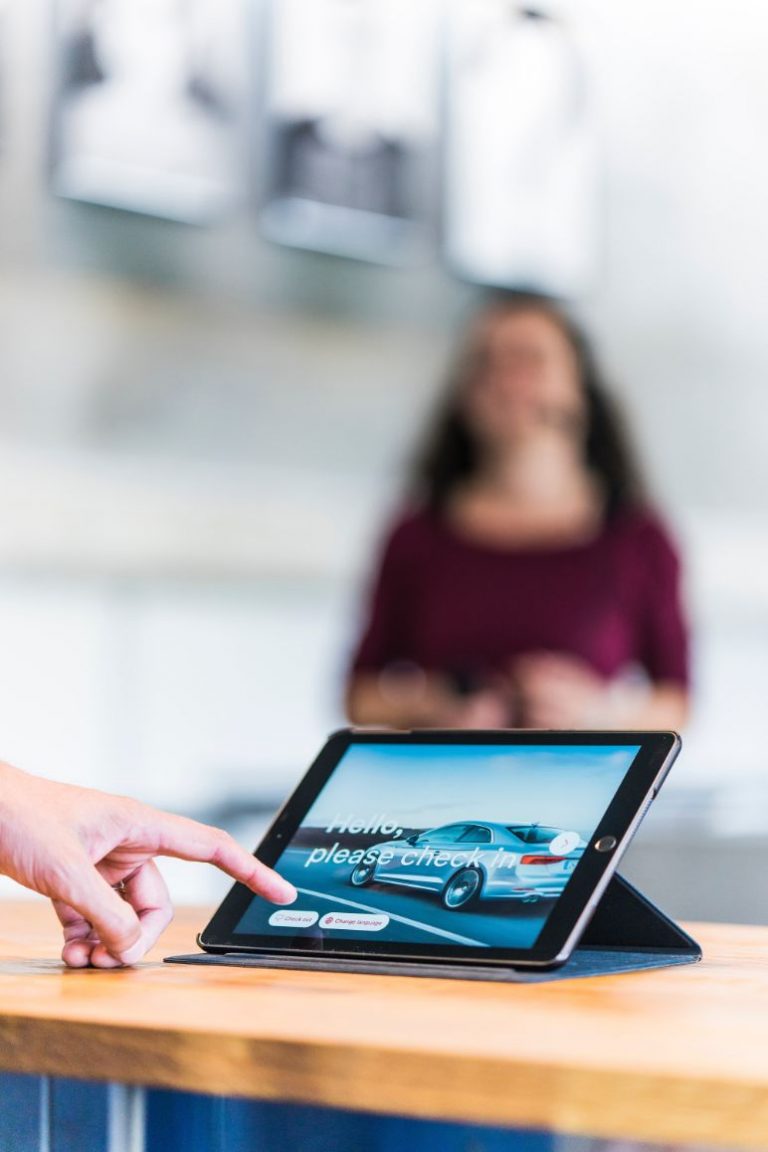
Asset booking software gives you a grip on usage.
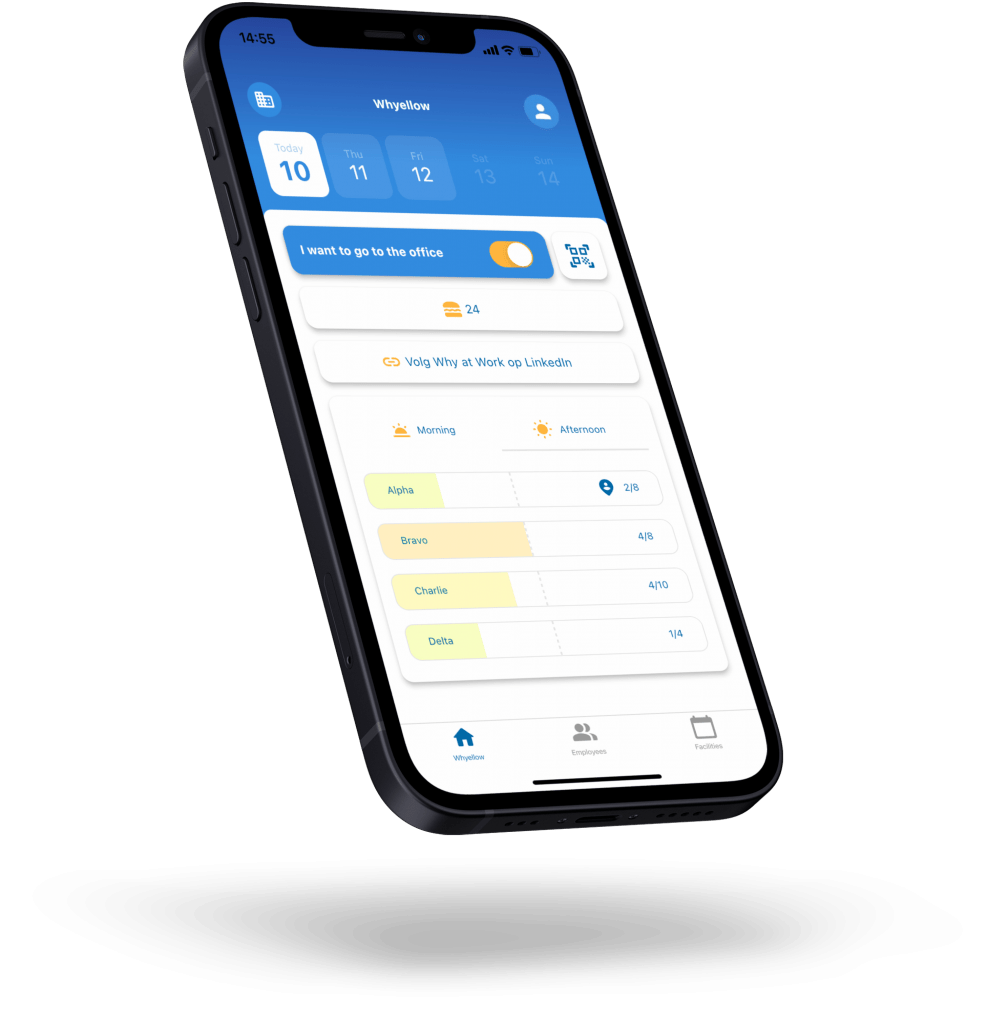
How do you keep track of office occupancy when employees decide for themselves where they work? With desk booking software, employees reserve a workplace for the days or half-days they want to be at the office. At the same time, you can flexibly adjust the number of available workplaces — and sometimes other facilities too. When guidelines change, you can respond quickly.
Designing your office based on data.
Most workplace reservation systems offer reporting and analysis capabilities. This gives the facility manager real insight into how the office is actually being used.
- Which days are the busiest?
- What are the most popular desks and spaces?
- How much parking capacity is actually being used?
- How many lunches need to be catered for?
- Which teams collaborate physically on-site — and does this show up in their results?
These are all insights a good reservation system can produce. With those insights, you can set up the office in the best possible way for happy employees.
Hybrid office: don’t overcomplicate things
Hybrid working is no longer a phase — it’s simply how we work. As a facility or operations manager, the question is no longer whether you facilitate this, but how you do so as simply as possible.
Bear in mind that behavioural change — booking in advance instead of just going to the office — takes time. And the more complicated the process, the longer that change takes.
With this in mind, we developed the Why at Work platform. A user-friendly app for employees and a simple yet functionally extensive web portal for administrators. Check out all the features, request a demo, or start your 30-day free trial today.